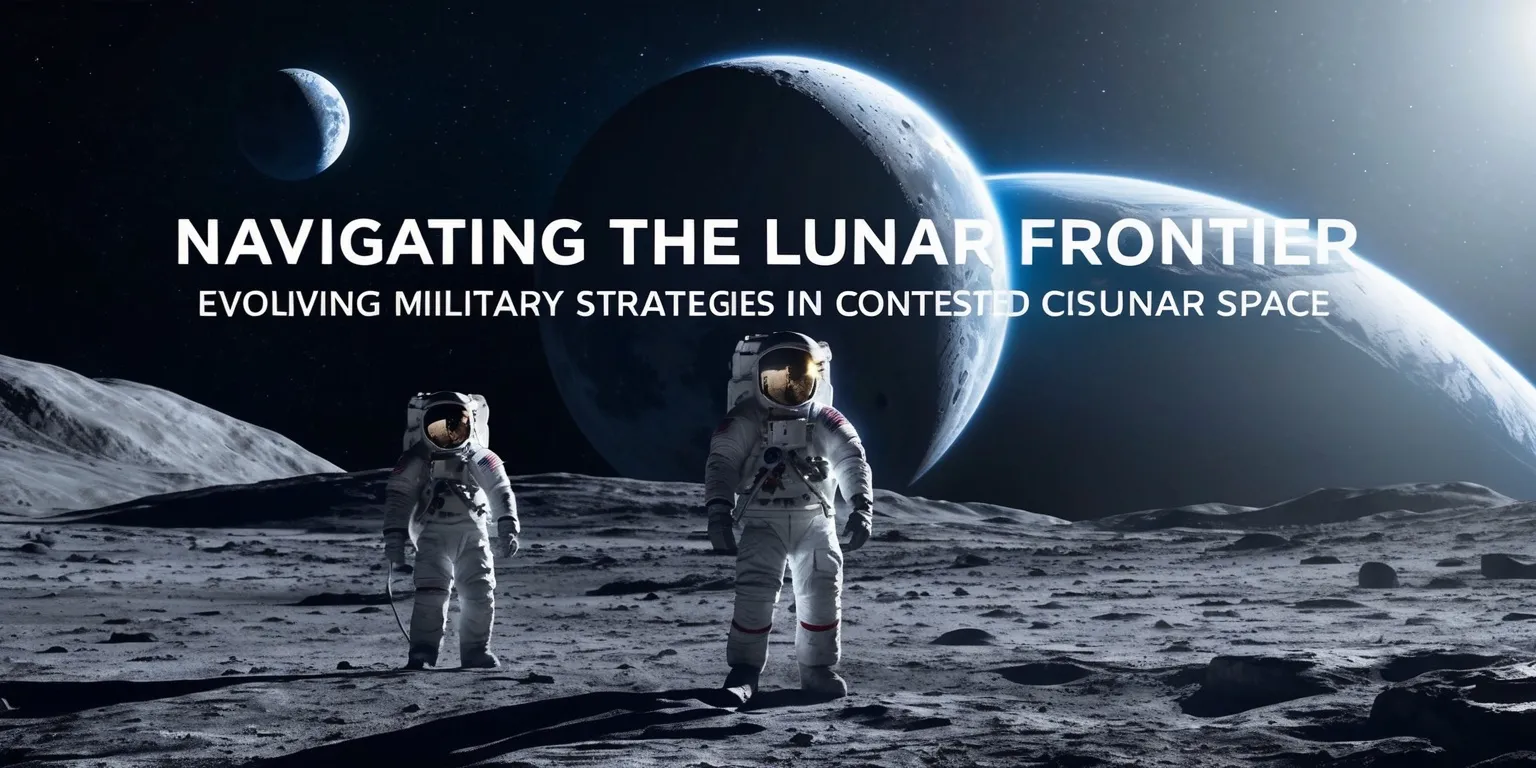
This discussion addresses the growing necessity for preparedness in lunar combat scenarios, an issue that has emerged in the wake of recent developments involving secretive space assets sent into orbit. The conversation takes on new urgency following emerging technologies and the ongoing evolution of space capabilities.
A high-ranking military official recently emphasized that forces must be ready to engage in conflicts "that may occur on or in the vicinity of the" moon. The official highlighted a need for the military to evolve in order to operate successfully in contested environments worldwide, extending from the deepest parts of the ocean to regions in space close to the lunar body.
During the annual event focused on air, space, and cyber developments, the military leader stressed the challenge of modern warfare, noting that current battlefields now extend from submerged realms to the expanse surrounding the moon. The concept of cislunar space is central to these discussions, yet its precise definition in the context of national law remains uncertain. There is debate over whether it only refers to the area just beyond the moon or also includes the moon’s surface itself.
Existing international agreements play a vital role in framing these challenges. Under the provisions of longstanding treaties, human activities on the moon are limited strictly to non-aggressive purposes. For example, the Outer Space Treaty of 1967 prohibits establishing bases with military functions, conducting weapons tests, or carrying out exercises that have a combat focus on the lunar surface. Only activities designated for scientific inquiry or other peaceful missions are allowed.
The imperative to tackle these concerns becomes even more acute heightened by ongoing international rivalries, particularly with a major Eastern power. Experts in space law have noted that reinforcing capabilities in near-lunar space is essential to ensure adherence to international commitments and to prevent any shift toward militarized presence in that region. One specialist remarked that the current gap in capabilities must be addressed promptly.
Some analysts express concern that the ambiguity in space law may only be resolved when a real conflict occurs in space, at which point the need to refine these rules will become indisputable. In summary, the push to adapt military strategies for operations that extend from the ocean depths to near-lunar space reflects a broader shift in global defense thinking.
- Emerging space technologies are expanding the battlefield.
- Debate continues over the definition and scope of cislunar space.
- International treaties restrict aggressive uses of the moon.
- Rivalries emphasize a need for enhanced capabilities in space.
- Future conflicts may serve as catalysts for updating space laws.